Thursday, February 8, 2024

Boundary-Crossing

  By Sr. Angela Thanh Trần

We possess the prophetic word that is unwavering. Pay careful attention to this word, as to a lamp shining in a dark place, until the day dawns, and the morning star rises in your hearts” (2 Peter 1:19).

Dominican Preaching: Encounter the Gospel-Actualized Community
with Fr. Greg Heille, OP


Scriptures at the Heart of Preaching
with Sr. Mila Díaz Solano, OP

We had powerful and in-depth sessions on Preaching with Fr. Greg Heille, OP, and Sr. Mila Díaz Solano, OP. They both connected us to the core of our Dominican charism. We all preach in and for the community. The invitation to expand our idea of who is included in "common" has lingered, specifically in the call to situate ourselves in solidarity with the marginalized. The challenging question is, how can we locate ourselves with the marginalized if we are so privileged in many ways?

We had our volunteer orientation at
Greyhound Bus Station with the Maryknolls,
Norbetines, and Franciscans.

With the increasing number of new arrivals in Chicago these days, some of us have committed to help at the Greyhound Bus station on certain Friday mornings (5:45-7:45 am). We collaborate with the ICDI (Illinois Community for Displaced Immigrants) to offer migrants food, water, clothes, directions to their next location, etc. One Friday, one of us came home and called for a house meeting after Morning Prayer, she said, “I encountered a family that I think was homeless. A young couple with a child. They speak Spanish. Only the wife knows a little English. They slept on the street the night before and couldn't afford the ticket to get to where they wanted to go. I would like to take them into our home and provide them food and a place to rest, while we help them get their tickets. Is it okay for you?”

I initially thought this was a crazy idea. None of us knew the family. Is it safe for them to come to our house? Is it safe for us to let them in? How are we doing with space? What about our schedule? It was not like we had “a day off.” Is it even possible to alter anything? The unexpected proposal disrupted the convenience of the day, and it opened up the door to a way of living consecrated poverty that we, as a community, did not experience before. It reminded me that we hold in common not only our resources, but also the time we choose to offer. This life involves a constant choice of saying Yes to one thing while saying No to the other, so I can fully be present in my Yes. We are not separated from reality. Consequentially, it became challenging when there was a choice that interfered with my privilege – my time. As we affirmed each other’s freedom by not looking for a right or wrong answer, we were also aware, the question was asked because one of us recognized our capacity to respond.

Holding together the ongoing unmet needs around us, we listened, asked questions, named our concerns, asked for help to address them, and finally said Yes.

It was on that same day that we had our class on the vow of Consecrated Celibacy
and a Zoom session with our three panelists -- Srs. Corinne Sanders, OP, 
Diane Capuano, OP, & Beth Quire, OP.

Consecrated Obedience I with Srs. Anna Oven,
OP, Kelly Moline, OP, & Katherine Frazier, OP
(Click on photo to zoom)
Consecrated Poverty with Srs. Jeanne Moore, OP, Cecilia Canales, OP, & Xiomara Mendez-Hernandez, OP

Consecrated Obedience II with Srs. Gloria Marie Jones, OP,
Teresa Hougnon, OP, & Sharon Casey, OP
Elyse, Teresa, Shingai, and I drove two cars to the station to pick up the family and all their luggage. In the meantime, Paula organized the space for them and installed the safety gate we borrowed from our neighbor (for the child), while Julie and Terri started baking and cooking. The family came, showered, ate, and rested in our house that day. We took them back to the bus station to catch the bus at night. When we said goodbye, one of us lifted her hands and asked if we could bless them with our Dominican Blessing. The husband, not knowing English, seeing her gesture, thought she wanted a high-five. He approached her, gently put his hands on her hands, and then gave her a big hug.

Two different languages. Two different cultures. Two different life forms. Two different worlds. The minute that line named difference was crossed, I heard the Good News. The whole Body of Christ was completely present in that embrace. I learned about preaching in the most real and tangible way I could ever grasp. It was in each person-to-person transforming encounter. It was about expanding and making space available for others. It was about struggling with the reality that we were unable to help everyone, and at the same time, knowing our capacity to bridge and collaborate in matters present right in front of us.

February 8 each year is a special day for my home Congregation – the Dominican Sisters of Mission San Jose, as we celebrate our Founder's Day. We give thanks to God for our Foundress, M. Maria Pia Backes, a pioneer preacher, who dared to cross the country in 1876. We remember all the Dominican women who have gone before us. The Word of God was spoken throughout their lives, in their generous “Yes” to the unmet needs, their courage to think in a bigger frame of mind, and their fidelity to a way of life that keeps on evolving.

We celebrated Terri's un-birthday this past weekend
with a Murder Mystery game (her actual birthday is in the summer).
We each dressed up as a character in that Murder Mystery and had a fabulous time!


Friday, January 26, 2024

The Importance of Story

By: Sr. Terri Schell

Over the holiday season, the novices all went to our home congregations. During that time, we were given homework to visit the archives and to find our story within a story of our congregation. Returning the CDN, reconnecting, and hearing each novice share their story was a real treat. As we took turns presenting, it was revealing to see each novice present in how and what they shared. 

I thought I would share with you my project.

--


Becoming Peace

A journey towards wholeness and unity

By: Sr. Terri Schell


"Ever Creating God, still Point of Eternal Peace, stir up within us your dream that all may be one.”
Prayer for Peace by Sr. Teresa Tuite, OP

What does it look like to work towards unity and peace? To believe in a God who dreams that all may be one?

These are the questions that were brimming in me as I headed down to the archives at the Dominican Sisters of Peace Motherhouse in Columbus early during Christmas break. 

And how in the world do I make this into a specific, discoverable topic to explore in three short weeks?


Peace’s story of eight Dominican congregations joining to become one has long been an inspiration and attraction for me. I am impressed with my sisters’ commitment, openness, and willingness to walk towards radical unity especially when it’s really difficult. How did they live this out, particularly early on in the congregation’s history when so much of the journey was uncharted territory? 


Michelle Ganz is nothing like you imagine an archivist would be like. She had the youthful enthusiasm of multiple kindergarten teachers and was thrilled to have not one but three researchers interested in diving into the towers of files holding the depths of the lives of sisters of past and present. 
“I’ve got to admit,” she announced excitedly, “you’re my first-ever researchers!”


After a passionate orientation of the archives and how archival research broadly worked, she guided us to the stacks that would be most promising and set us free. I knew my topic would be best discovered in the section labeled “Becoming Peace Transition” and began there. I sifted through various mock-ups of our logo, versions of Peace’s constitutions, and committee after committee’s meeting minutes… 
until I landed on something that caught and held my attention. 


The Name Chose Us

"We believe the Spirit of the Risen Christ named and commissioned us."
The Dominican Sisters of Peace, A Brief History

It was the summer of 2008. At this point, seven congregations had spent the last eleven years exploring the possibility of unifying and those deliberations were coming to a close with a decision to found a new congregation. A new beginning was in sight, set for April the following year.  The constitution was finalized and “suppression” of the previous congregational canonical documents were signed… but there was something yet to be decided: the name of the new union.


In May 2008, four sisters from four different congregations who were on the Prayer and Ritual Committee for the Transition Team met to finalize the elements of the upcoming gatherings of sisters. There were to be two Intercongregational Gatherings: One in New Orleans in June and one in Columbus in July. The four sisters were tasked with developing prayers and rituals that would assist in the inclusive movement toward a new congregation. They were asked to find ways to link the seven congregations together in prayer so that the mission, needs, and desires of the separate congregations became the mission, needs, and desires of a Union.

The Prayer and Ritual committee recalled the process of planning: 


“In preparing the prayers we wanted to be as inclusive as possible in respecting various styles and preferences regarding prayer. We tried to do this as a whole rather than each one represent everyone... Volunteers were requested and we did our best to have representation from each individual community.”


Teresa Tuite was one of the sisters on the committee. She recalls this point in the journey. “We had come to so many conclusions, even a unanimous decision on the constitution, but the selection of the name was SO HARD. It was because we were coming closer to the heart, and sisters were afraid we were going to forget the past.” 

Sisters describe this time of transition as heavy with emotion. This gathering was the first time they were meeting in person after having officially committed to a union. There was a spectrum of opinions and feelings. Some sisters had been actively working towards this for years, while some still were not in favor of becoming one. Folks described feeling skittish, excited, fearful, grieving, and optimistic. Sisters came to the gathering knowing what they were leaving behind, but not knowing what lay ahead. 


“You know, when you took vows for life, you didn’t think you would outlive your congregation,” Teresa explained.


Teresa described the intentional way the committee addressed the challenge. “We based the prayer and ritual experiences on the Jewish idea of remembrance, which honors the past, acknowledges the present, and hopes for the future. Past, present, future. Always moving forward.”


The outcome of the intentional, inclusive process led to a memorable moment and movement of the Holy Spirit.


During the weekends of the Intercongregational Gatherings, a trunk was set on display. A variety of items that were to be taken with the sisters on their journey were placed inside: a heart shaped box, Kleenex, scrapbooks, Meet the Relatives DVDs, two cents, letters and prayers of support from those not in attendance.

At the closing ritual, the prioress from each of the seven congregations came forward to pack the final items: the Necrology and Constitutions. The prioresses went in order by their congregation’s founding date: youngest to oldest. That left Joye Gros, Prioress of St. Catharine, Kentucky at the time, last. The top was meant to be closed gently, but instead, the lid of the chest slammed down with a resolute “BANG!” that echoed throughout the room. 
The symbolism was not lost on the sisters present. There was a hush in the room, a silence pregnant with the reality of the moment: that the previous congregations were complete and a new congregation was now one. 


When I asked Joye about the closing ritual and the trunk, she elusively remarked, “I did not do it with naiveté.”


The inclusive prayer and ritual throughout this weekend and previous gatherings lead to an important moment in Dominican Sisters of Peace’s founding. It was at these summer Intercongregational Gatherings that the final deliberations of the name of the new congregation were held. Over 100 suggestions had been offered: Catherine of Sienna, Holy Word, Resurrection, Providence to name a few. Peace was not originally near the top of the list. Yet, within these two separate gatherings, the name “Dominican Sisters of Peace” caught hold in both places with passion and peace. When asked, many sisters point to this experience of communally arriving upon our name as a true movement of the Holy Spirit. 

 Every Peace sister who was there has something to share about their experience. 


Sr. Eleanor told me she wasn’t on board with the union until after the naming process occurred. “That convinced me.” 

While sharing with me, Sr. Therese eyes welled a bit remembering the pro-peace comment that spoke to her at the gathering, “You know we were founded on Easter. A sister asked, ‘What did the risen Christ offer the world? Peace.’ ” 


Many were amazed that the same conclusions came out of two separate gatherings. Sr. Barb, who oversaw the naming process often says, “The name chose us.” 


It is the shared feeling that the spirit of the risen Christ named and commissioned the Dominican Sisters of Peace. 

An Intertwining of Stories

This moment in my congregation’s history weaves neatly with the fabric of my own life.

I’ve been on a journey since adulthood of deepening my desire and capacity for profound communion with God and all creation.                                                                   

My perspective has been greatly expanded by a growing awareness of the interconnectedness of the universe. That we are called by a relational Triune God to wholeness and right relationship with all that is.     

Each step of the way God called me to a widening and deepening of how I might live and love. Prior to discerning religious life, my life had been full, vibrant and meaningful with a fulfilling ministry, intentional community of friends and loved ones, a richness in adventure and connection with the land.


And yet — I was called to something more.


The seven congregations that founded Peace were also independent congregations with a richness in their histories, members, ministries, and cultures. And yet, they too were called to something more, something bigger than themselves. 


Neither I nor the individual congregations could live the way we once did after being invited into the newness of life. Not that there weren’t other options, but we responded to a “drawing forth” into an alluring mystery of greater communion and commitment. 


And now I seek to maintain myself while still blending into the wholeness and unity of my congregation. I seek a balance that honors my past, acknowledges who I am today, and hopes for unity in the future.                            

The congregations that make up Peace have done the same. They too entered into the journey of holding onto the richness of their identities while blending into wholeness of the Dominican Sisters of Peace. 

This is hard work! But we’ve come to know that “dyings, large and small, make an opening, a necessary passageway that allows new and more expansive life to enter. The grace of unity enters the gap.” (Elaine M. Pravallet SL). 


It takes prayer, intentionality, inclusivity, conscious effort, and guidance from the Holy Spirit. 

My congregation and I are still on that journey.


 I am on a lifelong search for what unity, alignment, and harmony might look like in the cosmos, in my congregation, and within me.


Tuesday, January 16, 2024

The Body of Christ

By: Sr. Shingai Chigwedere

As we celebrate the life and legacy of Rev. Dr. Martin Luther King, Jr this week, I have been reflecting on ways that God is inviting me to be an instrument of working to end oppression, being peace and advocating for justice and love in the world. As I pray for the preparations for the July National Eucharistic Congress in Indianapolis, Indiana (my former Archdiocese), the Body of Christ keeps coming forth in my prayer and thoughts.

“This is my body that is for you…” (1 Cor 11:23)

My main ministry this year is at Cook County Jail in Chicago, IL, through an Archdiocese of Chicago program called Kolbe House Jail Ministry. First, let me offer a few things I learned about jail. 95% of those inside Cook County Jail are awaiting trial. They are detained pending trial, thus they are known as detainees or Individuals in Custody (IIC). They are not inmates because they have not been convicted and sentenced. Prison is where one serves time for the crime for which they were convicted and sentenced. As an aside but worth mentioning, the Chicago Tribune newspaper did a 4-part investigative series in April 2023 regarding the concerning court delays of murder cases in Cook County. Advocates nationally aim for murder cases to take no more than a year. Cook County’s goal is a little more than two years. But it’s now taking more than four to complete most of the county’s murder cases, with some lasting up to a decade or more… Separating the guilty from the innocent takes longer than courthouses in any city for which comparable data was available, including New York and Los Angeles.” Reading articles such as the one I quoted above have helped me understand the legal complexities and more importantly reminded me about our collective responsibility to advocate for a just and fair due process.

Sr. Shingai and fellow Kolbe House volunteers

For I was hungry and you gave me food…a stranger and you welcomed me… (Mt 25:35) 

Our trainer at Kolbe House made sure to remind us that, “Their (IIC) innocence or guilt is not our concern, that is the domain of the corrections system. Our domain is spiritual accompaniment regardless of verdict.” Each week, I co-facilitate a faith sharing group in the men’s division. I serve with two faith filled female volunteers who I am in awe of every session. We check-in with each man, how are they, how was their week? Then we ask for one of the men to lead us in opening prayer. We watch an episode of the TV series, The Chosen, which is about the life of Jesus and his apostles. Next, we discuss the episode, what intrigued us, concerned us, how did God speak to us. Then we have about five minutes of silent meditation, with the prompt “picture God lovingly gazing at us.” Lastly, one of us Kolbe volunteers closes in prayer and invites everyone to offer aloud prayer intentions including praying for mercy, compassion and justice for any upcoming court dates. Each session is 1.5 hrs to 2 hrs. 

There is no stranger among us, we share in this sacred sharing of truth, healing, mercy and acceptance. These men have taught me so much about, remaining with Christ in God’s Word, trusting through the most difficult of times, recognizing their mistakes and yet remembering they are not who they once were. Their desire to know Christ, to share Christ and to be Christ to others is heartwarming and inspiring. They tell us how nourished they are by this weekly session and how it reminds them of their dignity as a beloved child of God.


Sr. Shingai and Sr. Terri heading off to mass at Cook County Jail

For I was…in prison and you visited me. (Mt 25:36)

My fellow novice, Sr. Terri and I also help out with mass in the women’s division once a month. My first time was both a jarring and moving experience. About a dozen women joined us in a small room where we gathered around the makeshift altar. As part of his homily, Father asked the women to think about how they can practice Christ’s command to love their neighbors, even while in jail. I noticed that Father did not minimize their reality, yet invited them to think about how they can live the gospel message of love, in the midst of such difficult and challenging circumstances. The responses were heartwarming: giving a woman a tissue to wipe her tears, being respectful of each other, being nice to each other, sharing your extra bread when others are hungry in between meals.

During the Eucharistic prayer and epiclesis when Father said, “for this is my body”, I was all of a sudden filled with an overwhelming sense of community. I glanced around the room and in my heart heard, “yes, this is the Body of Christ, we are the Body of Christ”. Although we will go back to different realities, all of us in that room, in our brokenness, messy lives, in need of healing, we are beloved children of God. As Sr. Terri and I sang Open my eyes Lord, I was grateful for the beauty of this liturgy. I thanked God for the hour of freedom the women had experienced at mass with us and prayed it fed their souls until the next liturgy.

Sr. Paula and Sr. Shingai - Christmas Day Mass at Motherhouse

For I was…ill and you cared for me… (Mt 25:36)

During Christmas I spent the holiday at our Motherhouse in Columbus, Ohio. We have about 65 sisters who live there and about 40 in Mohun, our health care center that is attached to the Motherhouse and has a memory care unit. I had never spent a night in our Columbus Motherhouse so being there for Christmas and New Year’s was such a gift for me. In addition to some reading, we also had an individual project to complete that was designed to help us understand how to research our archives, learn more about our congregational history and encourage deeper conversations with our sisters. So while it was a break from our regular novitiate schedule, it was a busy and spirit filled time of prayer, study, and community.

For breakfast, lunch, and dinner I enjoyed sitting with different sisters and sharing stories. They were excited to hear about my novitiate experience and in turn I was excited to hear more about their vocation stories and their hopes and dreams for us. The most difficult and touching visits were with our sisters in Mohun. The sisters have a variety of healthcare needs including memory concerns. In addition to helping out at Bingo, the Christmas Party, proclaiming God's Word at Mass or celebrating birthdays we had the privilege of one on one visits with sisters as they were available. Those were special moments of grace. The sisters were so excited to meet us novices and mentioned many times that we are signs of hope for them. Hope that this Dominican heritage will continue on and affirmation that God is still calling women to this vocation to religious life. All of them pray for us daily and for them to meet some of us for the first time in person brought them tremendous joy. It was also sobering to see the aging process and the struggles with memory.

My stay at our Motherhouse was a blessing! I was impressed by the level of curiosity and earnestness of our sisters’ questions. I loved the gentle ways they weaved in pearls of wisdom that have helped deepen or affirm my vocational discernment. It was as if God was surrounding with me a cloud of witnesses on this sacred journey. I will be forever grateful that I was able to thank the sisters for their yes to this call which paved the way for me (us) to be here. I appreciate how God allowed this mutual sharing to provide us with hope and trust in what the future holds. It was a beautiful way to experience Our story and the Body of Christ.


Friday, December 15, 2023

Merry Christmas from the Collaborative Novitiate.

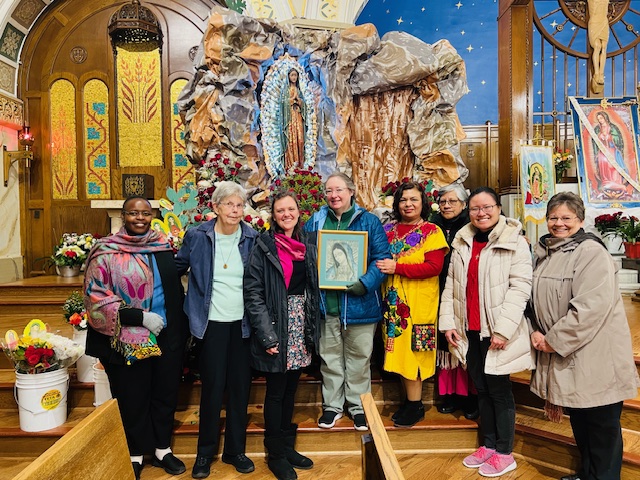
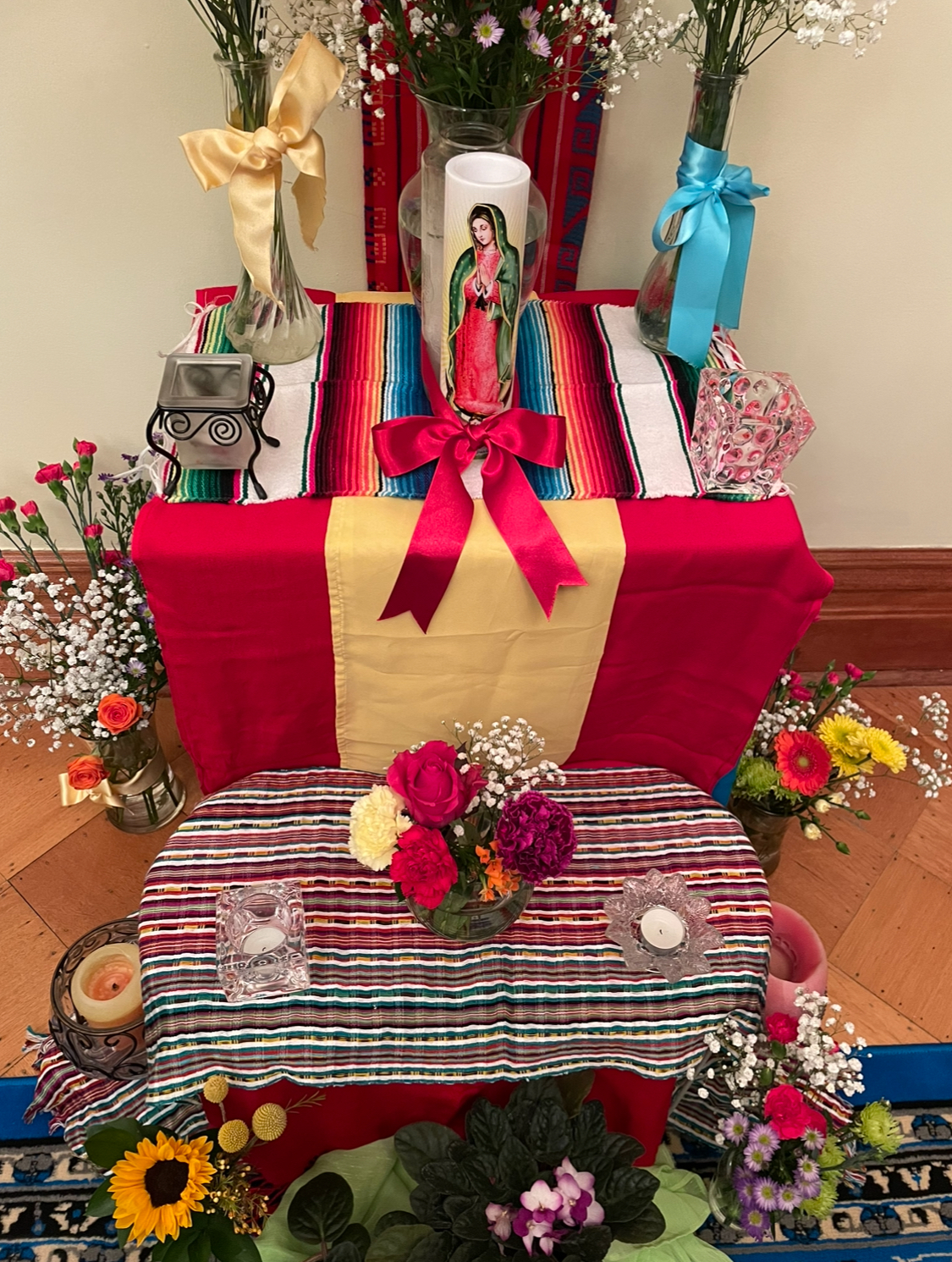
 The Feast Day for Our Lady of Guadalupe was a special day at the novitiate house this month.

The Novices, directors and some new friends at Saint Pius V for a very early morning mass.

The women of the novitiate all decorated our chapel for Our Lady of Guadalupe’s Feast Day, We all learned and sang a song, in Spanish, in honor of the day.


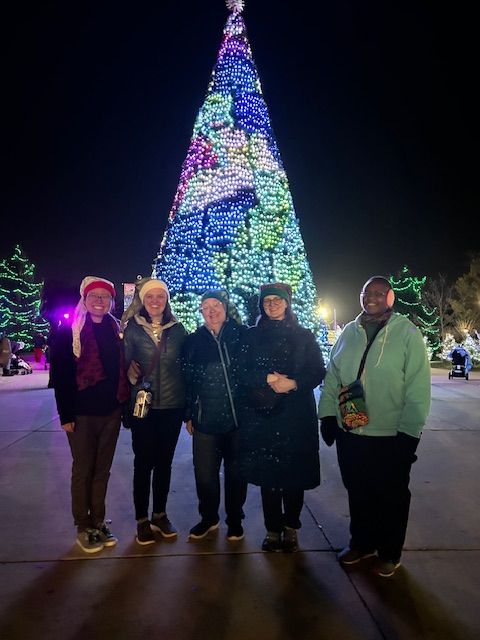
On Thursday, December 14, the directors surprised us with tickets to the Brookfield Zoo Holiday Magic light display.  The traffic in Chicago was moving slow.  I was feeling like it was taking forever to get to the zoo.  Someone in our car reminded me that…Advent is a time of waiting. We did eventually arrive and were rewarded by the vision of hundreds of Christmas trees, decorations and lights.   


                All of the Women at the Novitiate wish you a very Merry Christmas.


Saturday, December 9, 2023

O Come, O Come Emmanuel

At the CDN, as we observe the Advent season and prepare for visits to our home congregations, we seem to be busier than ever. 

Here are a few things we've done since our last blog update:


A local parish held a winter coat drive for the many migrants and refugees who have recently arrived in Chicago. We were happy to be able to participate, both together and individually in various ways. Here we are, along with parish volunteers, helping to sort donations. Some of us were able to contribute in other ways as well, removing stains, repairing rips, and washing and drying quality donations that needed a little TLC. The final event was a great success and many persons and families in need were provided with new and gently-used Chicago winter essentials.


In our house, we had a wonderful Thanksgiving celebration. We explored new ways of practicing flexibility when our plans had to change at the last minute due to illness. Fortunately, some of our guests were still able to join us.


The illness of one member didn't dampen our enthusiasm for cooking, and we ended up with a truly remarkable quantity of food -- including four pies!


At the end of November, we were blessed to be able to attend an evening at Dominican University on the life and legacy of Albert Nolan OP. Not all of us were familiar with his work, but the introduction to Nolan and his context certainly gave us food for thought. Panelists at the event were Dr Fannie Rushing, Don Goergen OP, Fr Thulani Magwaza, and Timothy Radcliffe OP. The panel was ably moderated by our sister Barbara Reid OP. We were delighted to find that all panelists would be appearing in person rather than via Zoom, and couldn't resist a group picture. 


My own (Julie's) notes from the event are largely about the idea of contextual theology, this blend of the experiential and the scholarly. Albert Nolan bore witness to the suffering he personally saw and knew, and was able to use his intellect to reflect theologically on that suffering. 
Sometimes theology can (quite fairly) be criticized for a certain detachment from reality, a preference for abstract ideas seemingly divorced from any human context. As Dominicans, we are called to seek truth, not as an abstraction but in the person of Christ, and in the persons who surround us. 
It's important that our theology be grounded in the human reality of our experience of God and our neighbor. As persons born into various kinds of privilege, we must be careful to avoid ivory-tower thinking. We are called to stand in solidarity with persons on the margins.
As we grow in our knowledge and understanding, we begin to see more and more problems in the world. None of these problems come with easy solutions. As Don Goergen said, "What a prophet does at this time, is not lose hope!"
So we continue together, placing our hope in God. 


As part of our concern for social justice, we participated in a vigil to remember the many victims of homicide in the Chicago area over the last month. We continue to hope and pray for an end to violence in our neighborhoods and throughout the world.


This Advent, we await Christ in our hearts and communities.
We join together in prayer with all who pray for us, both near and far. 
Blessings to you and your loved ones,
as we prepare together to welcome Emmanuel,
God-with-us,
in each person we encounter.


Wednesday, November 22, 2023

Thanksgiving - Immersed in the Season of Gratitude & Wonderings


The past three weeks have been full. We are thankful for the opportunity to visit three Dominican Congregations in Racine, Grand Rapids, and Adrian. We celebrated Paula's birthday in between our trips.

Happy Birthday, Paula!
Click on photo to zoom


IN-TO-ME-SEE (Intimacy)
"Celibacy is a vow for relatedness." - Diarmuid O'Murchu

Click on photo to zoom
After our workshop on Family of Origin that Shingai shared in the last post, we came back to Racine the following week for a 4-day intense study on Human Sexuality and Celibacy with
Sr. Lynn M. Levo, CSJ, Ph. D. I was grateful to learn about the "energy" that inclines me into relationships with others, and to be more aware of how destructive it can be to adopt a conditional identity (ie. I need to have "this" or "that" in order to accept myself). We were challenged by different controversial situations revolving around gender identity and sexual orientation, and how the call to diversity, inclusion, and belonging remains crucial at the heart of every organization. We also had in-depth discussions on healthy integrated sexuality, which included how to meet our human needs, and how to address attractions, boundaries, and intimacy. We were left with a critical discernment question, "Is celibate life in community the best way for me to love and be loved, to give my gifts in service to others, and to be in relationship with God?"

"We preach the invisible presence of God and the visible absence of God."

Us with Sr. Megan McElroy, OP
We spent this past weekend visiting our Sisters in Grand Rapids and Adrian.

At Grand Rapids, we had a session on Preaching as Befriending with Sr. Megan McElroy, OP. We encountered the spirituality of a preacher, anchored in our friendship with God, and woven within the call to search for Truth and share it. I was amazed to learn that, depending on the community, there was an element of preaching, not against the Word, but against the text. If, as preachers, we are called to share the Good News, what news is considered good news? We were left with another question to ponder, "Is hard news good news?"

History => Her Story => Our Story => My Story

We were blessed with wonderful opportunities to learn the History of Grand Rapids and Adrian Dominicans when we visited our sisters. It was fascinating for me to grasp our history in a bigger context, realizing that we are more alike than we are unalike in our roots.


Click on photo to zoom

Us with our Adrian Dominican Sisters


Thank you for your prayers as we continue to sit with the questions that keep emerging during this privileged time of our Novitiate.

Posted by Angela

Sunday, November 12, 2023

Truth will spring from the earth

By Sr. Shingai Chigwedere

Love and truth will meet; justice and peace will kiss. Truth will spring from the earth; justice will look down from heaven.  (Ps 85:11-12) 

One of the reasons the Dominican charism appeals to me is the journey of seeking Truth, Veritas, through the four pillars of prayer, study, community, and ministry. I love to learn and am used to be an avid reader (less free time right now 😊). Study is not simply academic it is more so being aware of what is happening in the world and how God is calling us to respond. As the saying goes, Dominicans walk with the Bible in one hand and the newspaper in the other. In other words, as one Sister explained to me, “To be preachers of good news and calling one another to our best selves for the life of the world!” Here are a few ways, I have been graced so far with living the pillar of study.

Uncomfortable Truth

I love living in Hyde Park, a historically significant and diverse part of metropolitan Chicago. It has been a good cultural reconnection for me and a change from the homogenous suburban neighborhoods where I primarily lived in the past. I am in a place with lots of Black people and while not the majority, I don’t have to flex all the time to fit into a world of whiteness.

One way I have enjoyed getting to know my neighbors and surrounding neighborhoods is by riding public transportation. I take the bus to ministry to Cook County Jail where I co-facilitate a men’s faith sharing class using the TV series The Chosen, about the life of Jesus and his disciples. I am reminded each time I ride the bus, of the privilege I have to opt to drive a novice car to ministry during inclement weather. The privilege of not lugging my groceries and shopping supplies on multiple buses to get home. The privilege of not worrying about the balance on my  bus pass as it automatically gets reloaded when it reaches a certain amount. Riding the bus also keeps me connected to what neighbors are experiencing and thinking. Recently, I overheard the following conversation between two African Americans who were complaining that government officials “are trying to force Chicagoans to welcome migrants and refugees. They even want to shelter these migrants in Black communities” and frustratedly stated, “they don’t even care about us, yet they want us to house these people in our neighborhoods?” I was saddened to hear this from a group whose ancestors were enslaved and unwelcome in the US. Yet at the same time, I understood their frustration of not being seen and respected enough to receive adequate funding to address violent crime, provide affordable housing, and address food insecurity in Black neighborhoods. This is an uncomfortable truth I am confronted with daily as Chicago continues to grapple with how to welcome and provide shelter and safety for our new neighbors.

Painful Truth

I am taking a class at Catholic Theological Union (CTU)  called Reconciling Narratives: Racialization and the Theology of Robert J. Schreiter, C.PP.S. In simple terms, racialization means how people are defined by their race. In this class, we explore the theological anthropology of the social construct “race” and the interconnectedness to colonization, chattel slavery, white supremacy, and Christianity. We discuss truth, healing, and accountability in reconciling narratives, and ways of developing resources for a spirituality of reconciliation and restorative justice towards eradicating racism. It’s a fascinating class taught by a student and mentee of Schreiter. In addition to Schreiter’s books, we read books and articles by Willie James Jennings, Brian Bantum, James Cone, Kelly Brown Douglas, Rev. Dr. Martin Luther King Jr., Malcolm X, Fr. Virgilio Elizondo, M. Shawn Copeland, Eleazar Fernandez, and others. We have been graced on two separate occasions with guest speakers Maka Black Elk, Executive Director for Truth and Healing at Red Cloud Indian School in Pine Ridge, South Dakota and Dr. Marvin Wickware, a former student of Willie James Jennings. This is heavy and important content in the long history of the Catholic Church and of the United States. The class is challenging my prejudices, teaching me new vocabulary, and requires me to be merciful as we dig through this messy and enormously complex painful truth of a racialized world.


(Sr. Julie, Dr. Shannen Dee Williams, Sr. Shingai, and Sr. Terri) 

Difficult Truth

CTU’s center for the Study of Consecrated Life hosted a talk by Dr. Shannen Dee Williams entitled “Reckoning with Dangerous Memories in the History of US Catholic Women’s Religious Life.” Dr. Williams shared the mostly unreconciled histories of slavery and segregation in U.S. women’s religious life as well as some notable attempts to make reparation for the enduring sin of anti-Black racism and exclusion within Catholic boundaries. It brough to life for me the history of women religious congregations who owned slaves and denied entry to Black women because of race. It was interesting to hear how many congregations opened up their archives to Dr. Williams for her research that led to her book Subversive Habits: Black Catholic Nuns in the Long African American Freedom Struggle. On the other hand, to hear that some have refused and the various reasons for this reluctance. It was good to hear about the various apologies, healing ceremonies, and ongoing dialogue some of the congregations have engaged in to work through this difficult truth.

Healing Truth

As part of the inter-community novitiate (ICN), we spent three days of intense study on family of origin. We created genograms, discussed our family structures, birth order, the stories we’ve heard and legacies we want to continue. One of the most enlightening exercises we completed was to create a timeline of significant events in our family (moves, deaths, births, divorces, wars, the great depression, pandemic, etc.). When I overlayed these dates with the genogram I had a new perspective on why my siblings and I experienced or seem to remember events differently. It was a fascinating and very helpful exercise to visually help make connections and see familial patterns. During the session we discussed ways to work on forgiveness and reconciliation (if needed) with our families, who did the best they could with what they knew. Having taken the time to understand significant events gave us a new perspective on our childhood experiences. It allowed us to understand our current situation better and how that informs the selves we bring to our religious communities - the gifts and the growing edges.

All of this learning so far is encouraging me to move through uncomfortable truths, painful truths, difficult truths, to transforming them into healing truths. I am grateful for this consecrated and concentrated Canonical year of prayer, study, and reflection.

I will end with this quote from Robert J. Schreiter, “Reconciliation is not about going back. It is about addressing the past adequately so that we can go forward.” (Schreiter, The Ministry of Reconciliation: Spirituality and Strategies, 18). 

Thank you for surrounding us with your ongoing prayers!